Case Study

Case Study Optimizing Medical Appointments in Public Healthcare

Introduction

Public Healthcare UX Design App Concept Testing

Introduction

Introduction

In Spain’s public healthcare system, patients often face a familiar struggle: obtaining a medical appointment can take weeks — and if a specialist is needed, the wait can stretch into months. For someone experiencing pain or uncertainty about their health, these delays can feel overwhelming.

This project set out to design a digital solution that would reduce waiting times and provide clarity throughout the medical care process. The goal was to offer patients a more human, efficient, and understandable experience.
Research

Research: Understanding the Real Pain Points

Then, through user interviews, we uncovered even stronger confirmation that excessive waiting times are the most frustrating part of the experience for users. Many patients expressed that they can tolerate not having full information immediately, but waiting weeks or months to simply move to the next step in their care feels unacceptable.

Persona

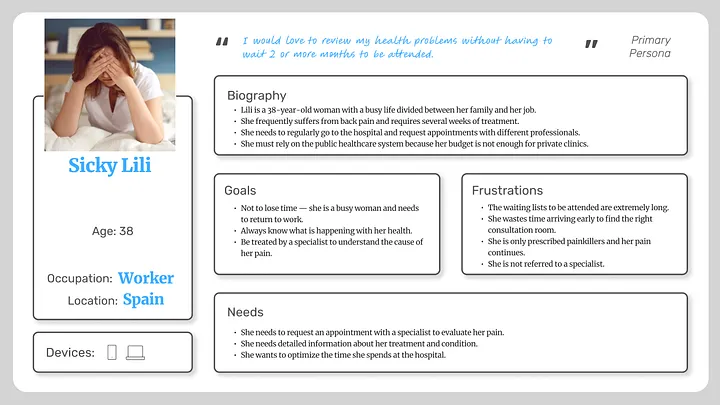
User Persona: Sicky Lili, 38 years old

To humanize these needs, we developed a primary persona: Lili, a full-time worker and mother who depends entirely on the public system. She needs regular medical attention for chronic back pain and cannot afford to waste time.

Her goals are simple: to stay informed, receive proper treatment, and get back to her day-to-day life.

Persona image for the public healthcare appointments case study.

Journey

The Patient Journey: A Cycle of Waiting

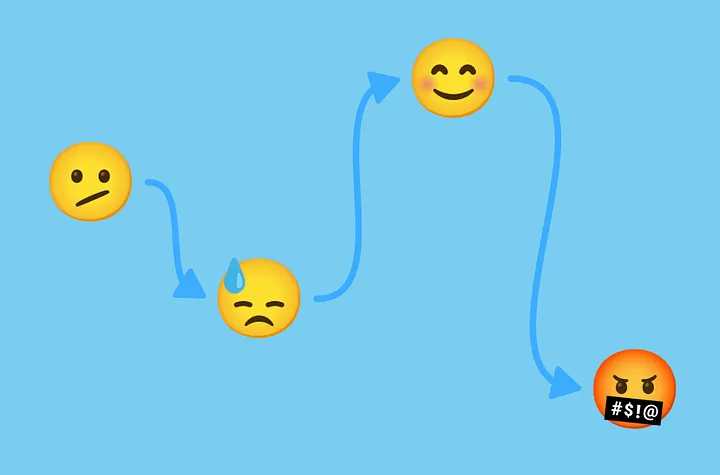
We mapped the patient journey and quickly identified a painful cycle: request an appointment → wait → see a doctor → get referred → wait again → repeat.

Patient journey image for the public healthcare appointments case study.

The lack of information and progress visibility significantly increases anxiety and dissatisfaction.

Ideation

Ideation: From “Worst Ideas” to Smart Solutions

During a creative session, we used the Worst Possible Idea technique to break assumptions. Surprisingly, some humorous concepts sparked great thinking once refined.

Two innovative ideas emerged from that exercise:

  1. A symptom-based questionnaire that identifies the right medical specialist from the start.
  2. A system that notifies patients when a new, earlier appointment becomes available.

Both ideas directly address the causes of excessive delays and are APP-based solutions.

Designing the Solution

Designing the Solution: Simplicity First

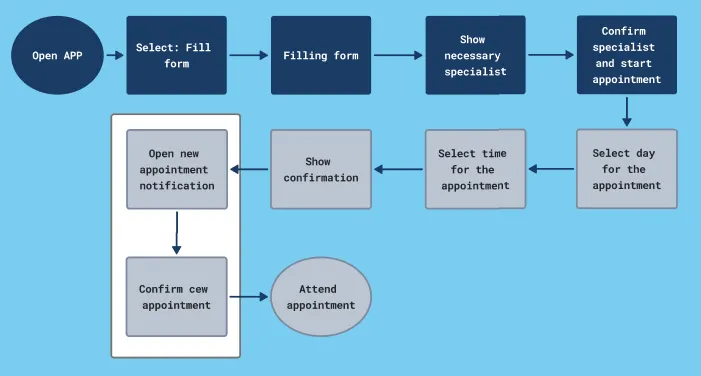
We focused on a simple, guided flow. The user opens the app, answers a short questionnaire, and — based on their symptoms — gets routed directly to the correct specialist.

Guided flow image for the public healthcare appointments case study.

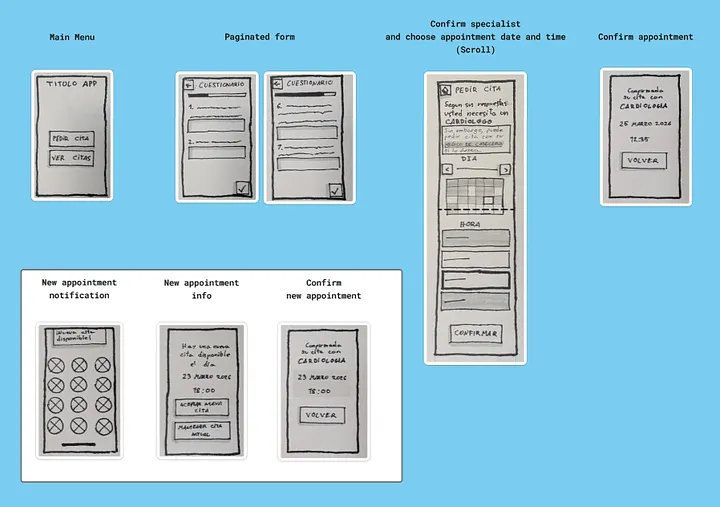
The UI prototype emphasized clarity, reducing stress and confusion through calm navigation and plain language.

UI prototype image for the public healthcare appointments case study.

Testing

Testing: Validating the Concept with Real Users

We conducted three usability test sessions with users who recently had medical appointments. The feedback was overwhelmingly positive. They found the flow intuitive and felt that it truly solved a real problem.

Some valuable feedback guided improvements:

  • Add appointment confirmations via SMS or email
  • Clarify step transitions visually
  • Include basic medical data (allergies, conditions)

After iterating, all testers said they would use this app if it were part of the public healthcare ecosystem.

Final Outcome

Final Outcome

The result is a solution that:

  • Reduces wasted waiting time
  • Gives the patient control and reassurance
  • Improves efficiency in the healthcare system
  • Prevents unnecessary visits and stress

By improving communication and visibility — not the medical process itself — we give users something incredibly valuable: peace of mind.

Reflection

Reflection and Next Steps

This project demonstrated how user-centered design can create positive impact even within complex systems. Next steps would include:

  • Creating a polished visual UI design
  • Integrating access to medical results and treatment details
  • Working with healthcare institutions for real-world implementation

Ultimately, this experience reinforced a simple belief:

More Work

View more work and explore the rest of the case study library.

View more work